آیا آنالایزرهای XRF دستی ایمن هستند؟ بررسی تخصصی درباره تابش و قوانین عملکرد
چکیده:آنالایزرهای فلورسانس پرتو ایکس (XRF) دستیاز لامپهای کوچک پرتو ایکس برای تولید تابش ایجادشده بهصورت الکتریکی استفاده میکنند. آنها هیچ ایزوتوپ پرتوزایی ندارند و هنگام خاموش بودن هیچ تابش باقیماندهای منتشر نمیکنند. در صورت عملکرد صحیح و رعایت الزامات، سطح تابش پراکنده بسیار پایینتر از حدود ایمنی بینالمللی باقی میماند و این دستگاه را بهطور استثنایی ایمن میسازد. خطرات اصلی تابش کاملاً ناشی از استفاده نادرست هستند، مانند نشانه گرفتن آنالایزر به سمت افراد یا نگه داشتن نمونههای کوچک با دست. با رعایت پروتکلهای ایمنی اصلی، بازرسیهای دورهای و گواهیهای انطباق، اپراتورها میتوانند به عملکرد روزانه بدون خطر دست یابند.
علم پشت ایمنی XRF دستی: خطر کنترلشده تابش
در بازیافت صنعتی فلزات، غربالگری خاکهای زیستمحیطی، اکتشافات زمینشناسی و آزمایشهای انطباق با RoHS، طیفسنجهای فلورسانس پرتو ایکس (XRF) دستیبهدلیل قابلیتهای سریع و غیرمخرب آزمایش در محل، به ابزارهایی ضروری تبدیل شدهاند.
بااینحال، چون واژه «پرتو ایکس» در نام آن وجود دارد، اپراتورها و کارکنان میدانی اغلب میپرسند: آیا یک XRF دستیتابش منتشر میکند؟ آیا تابش XRF دستی برای سلامت انسان مضر است؟
برای پاسخ به این نگرانی مهم، این راهنما اصول کاری، استانداردهای ایمنی بینالمللی و دستورالعملهای عملیاتی مربوط به دستگاههای XRF دستیرا بررسی میکند.
۱. اصل اساسی: تابش تولیدشده بهصورت الکتریکی در برابر ایزوتوپهای پرتوزا
ابتدا اجازه دهید اصل فیزیکی بنیادی را روشن کنیم: آنالایزرهای XRF دستیتابش پرتو ایکس منتشر میکنند، اما حاوی ایزوتوپهای پرتوزا (منابع پرتوزا) نیستند.
یک آنالایزر XRFدرون خود یک لامپ کوچک پرتو ایکس با ولتاژ بالا دارد. سازوکار آن مشابه یک چراغقوه الکتریکی عمل میکند:
هنگام خاموش بودن یا حالت آمادهبهکار(رها شدن ماشه): دستگاه بدون برق است. هیچ تابشی منتشر نمیکند و مانند هر دستگاه الکترونیکی معمولی عمل میکند.
هنگام کشیدن ماشه (آزمایش فعال): ولتاژ بالا، لامپ پرتو ایکس را تغذیه میکند و پرتویی از پرتوهای ایکس پرانرژی را به سمت نمونه منتشر میسازد. این کار ماده را تحریک میکند تا پرتوهای ایکس فلورسنت مشخصه برای آنالیز عنصریمنتشر کند.
این بدان معناست که هر زمان آنالایزر در حال انجام آزمایش فعال نباشد، هیچ خطر تابش باقیمانده یا آلودگی پرتوزا وجود ندارد.
۲. یک XRF چه مقدار تابش منتشر میکند؟ درک حدود ایمنی
ارزیابی خطر تابش بدون اندازهگیری دوز، از نظر علمی نادرست است.
طبق مقررات و استانداردهای ایمنی جهانی (مانند GBZ 115 - استاندارد حفاظت پرتوی در دستگاههای مولد تابش کمانرژی)، طیفسنجهای XRFبهعنوان دستگاههای تابش کمانرژی با پرتو باز طبقهبندی میشوند. آنالایزرهای XRFتجاری با محافظت داخلی در برابر تابش، شامل پوششهای سربی و محافظهای جلویی در برابر تابش پراکنده، ساخته میشوند.
تابش نشتی ناچیز: در طول اندازهگیری استاندارد، خارج از مسیر پرتو اصلی (پنجره آزمایش)، نرخ دوز تابش در نزدیکی دسته نگهدارنده و محفظه پشتی بسیار پایین است—بسیار پایینتر از حدود ایمنی سلامت شغلی.
مواجهه تجمعی روزانه: هنگام پیروی از روشهای استاندارد، دوز تجمعی تابش پراکنده یک اپراتور در یک روز کامل کمتر از دوز یک تصویربرداری استاندارد پرتو ایکس قفسه سینه پزشکی است. همچنین این مقدار بهطور قابلتوجهی کمتر از تابش زمینه طبیعی (مانند پرتوهای کیهانی و تابش زمینی) است که هر انسان سالانه جذب میکند.
خلاصه مطلبخلاصه: تا زمانی که دهانه آزمایش هرگز به سمت بدن انسان نشانه نرود، یک تفنگ XRF برای کار کردن ایمن است.
۳. خطرات واقعی تابش XRF از کجا ناشی میشوند؟
اگرچه تولیدکنندگان چندین سامانه قفل ایمنی سختافزاری را اجرا میکنند، روشهای ناایمن همچنان علت اصلی مواجهه ناخواسته هستند. خطرات اصلی ایمنی شامل موارد زیر است:
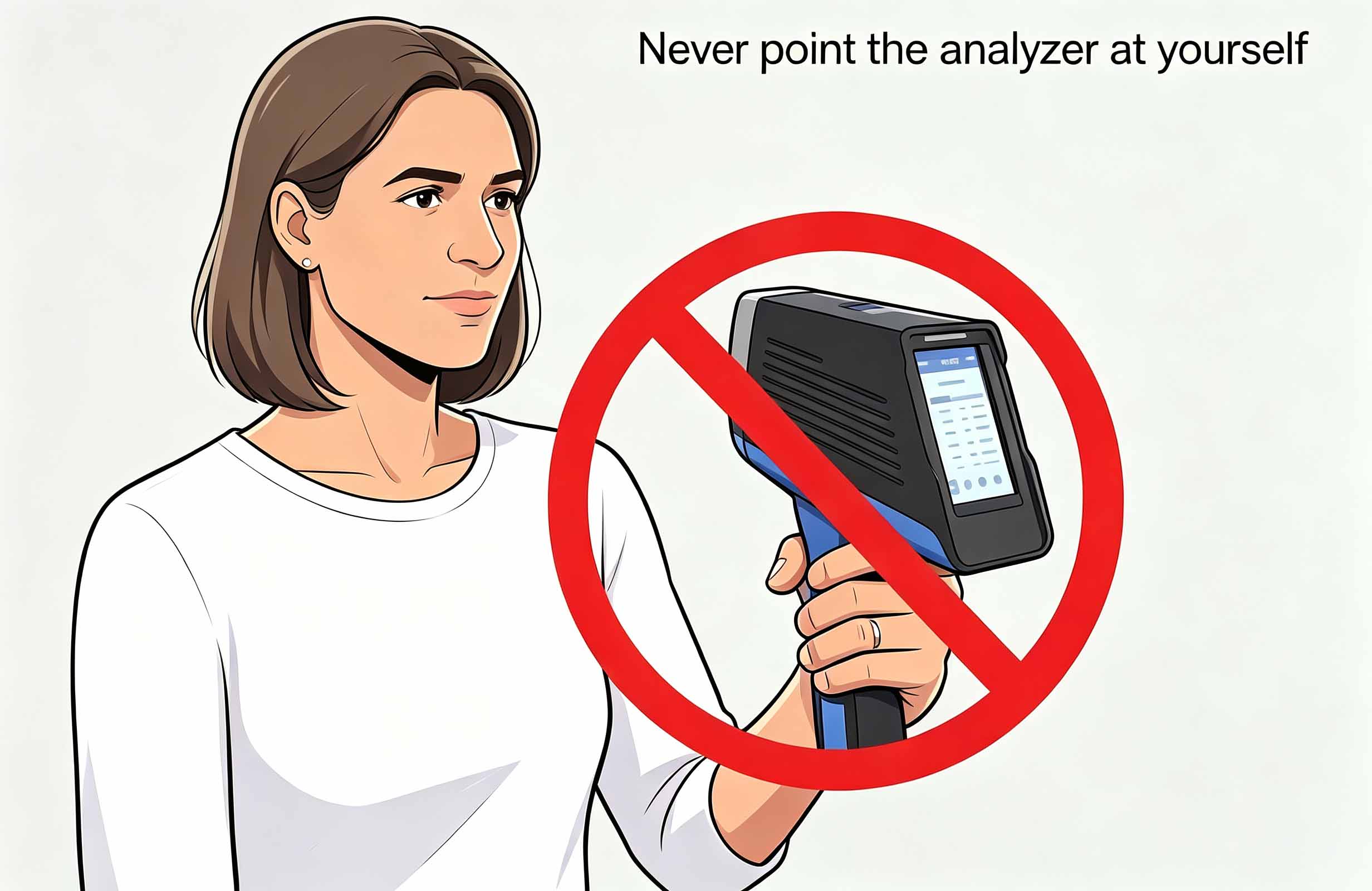
هدایت پرتو به سمت بدن : نشانه رفتن پنجره آزمایش XRF به سمت خود یا همکاران (برای مثال، تلاش برای آزمایش یک حلقه روی انگشت یا بررسی پوست).
نگه داشتن نمونههای کوچک با دست : نگه داشتن مستقیم قطعات کوچک، بستها یا ورقهای فلزی نازک با انگشتان هنگام فشردن ماشه. این کار بافتهای دست را مستقیماً درون پرتو اصلی پرتو ایکس (پرتوی مفید) قرار میدهد.
دور زدن قفلهای ایمنی : وادار کردن دستگاه به شلیک در فضای باز هنگامی که حسگرهای مجاورت، قفلهای تشخیص نمونه یا چراغهای هشدار LED آسیب دیده یا دستکاری شدهاند.
۴. چهار قانون ایمنی برای کار با XRF دستی بدون خطرعملکرد XRF دستی
برای تضمین ایمنی کامل در محیط کار، سازمانها و اپراتورها باید این چهار اقدام احتیاطی اصلی را اجرا کنند:
قانون ۱: از اصول «سه هرگز» پیروی کنید
هرگز پنجره آزمایش را به سمت هیچ بخشی از بدن انسان نشانه نگیرید.
هرگز نمونههای کوچک را هنگام آزمایش در دست خود نگه ندارید (همیشه از پایه آزمایش اختصاصی دارای حفاظ تابشی یا محفظه رومیزی استفاده کنید).
هرگز بدون وجود نمونه یا پوشش حفاظتی برای دهانه، آزمایش را در فضای باز فعال نکنید.
قانون ۲: لایههای پنجره و قفلهای ایمنی را بررسی کنید
پیش از هر شیفت کاری، لایه پنجره جلویی را از نظر پارگی یا سوراخشدگی بررسی کنید. اطمینان حاصل کنید که حسگر مجاورت، قفلهای ایمنی و چراغهای هشدار انتشار پرتو ایکس بهدرستی کار میکنند.
قانون ۳: انطباق، آموزش و دوزسنجی
اطمینان حاصل کنید که همه اپراتورها آموزش ایمنی تابش را تکمیل کردهاند. با دریافت مجوزهای مناسب ایمنی تابش و اجرای برنامههای پایش فردی (مانند استفاده از دوزسنجهای حلقهای انگشت یا نشانگرهای بدنی) الزامات مقررات محلی را رعایت کنید.
قانون ۴: برنامهریزی آزمایش سالانه نشت تابش
بازرسیهای سالانه نشت تابش را از طریق یک نهاد شخص ثالث معتبر انجام دهید. هر زمان که اجزای اصلی (مانند مجموعه لوله پرتو ایکس) تعویض یا تعمیر میشوند، دستگاه را دوباره تأییدیهگیری کنید.
نکات پایانی
فناوری XRF دستی یک ابزار تحلیلی صنعتی بالغ، بسیار کنترلشده و ایمن است. اگرچه ایمنی تابش باید همیشه جدی گرفته شود، نیازی به نگرانی بیش از حد نیست. با پیروی از پروتکلهای استاندارد ایمنی شغلی و دستورالعملهای ایمنی، اپراتورها میتوانند آزمایشهای تحلیلی سریع و دقیق را انجام دهند و در عین حال محیط کاری کاملاً ایمن را حفظ کنند.
لطفاً برای پرسشهای بیشتر یا اطلاعات جزئیتر با ما تماس بگیرید!
تلفن:+86-183-5283 6805
ایمیل:sales@jinyibo.com
وب:www.jinyibo.com